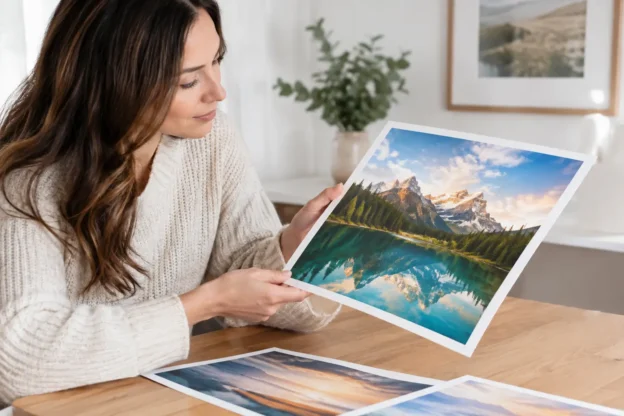
A print can look excellent when it arrives and still lose impact years earlier than expected if it is placed in the wrong light. So, are art prints fade resistant? Many are made to resist fading, but no printed image is completely immune to light, heat, humidity and poor-quality materials. How long a print retains its original colour depends on the printing method, inks, paper, display conditions and basic care.
For buyers choosing photographic wall art for a home, workplace, hotel or public-facing space, the useful question is not simply whether a print can fade. It is whether the print materials and its intended location are suitable for the lifespan you expect.
Are Art Prints Fade Resistant in Practice?
Fade resistance means a print is designed to hold its colour and tonal detail when exposed to normal indoor conditions. It does not mean the image can be hung in constant direct sunlight without change. Ultraviolet light is the main cause of fading, but ordinary daylight, strong artificial lighting, airborne pollutants and moisture also contribute over time.
A well-produced photographic print, displayed indoors away from harsh light, should remain visually strong for many years. The precise result varies. A framed landscape in a softly lit hallway faces a very different environment from a cityscape displayed opposite a south-facing window or a restaurant print under lights for long opening hours.
This distinction matters when selecting artwork from documentary, travel or event photography. Deep blue skies, rich greens, vivid flags and subtle shadow detail are often central to the image. Preserving those tones is as much about placement and framing as it is about the original print quality.
What Determines How Long a Print Lasts?
Ink and printing process
Modern inkjet art printing commonly uses either dye-based or pigment-based inks. Dye inks can produce bright, saturated colour, but they are generally more vulnerable to light exposure. Pigment inks are usually preferred for archival-style photographic prints because their particles are more stable and provide stronger resistance to fading.
This does not make every pigment print identical. Ink set, printer calibration and the paper or canvas coating all affect the outcome. A properly produced print uses materials intended to work together, rather than treating paper as an afterthought.
Traditional photographic processes and commercial poster printing can also produce good results, but longevity varies by supplier and substrate. If a print is being purchased for a long-term installation, it is reasonable to ask what printing process and materials are used.
Paper, canvas and surface finish
The print surface has a practical role in both appearance and durability. Fine art papers, resin-coated photographic papers and canvas all respond differently to light and handling. A quality paper with a suitable coating helps the ink remain stable and protects detail in highlights and dark areas.
Gloss finishes can make colour appear especially vivid, particularly in night scenes, transport photography and colourful city imagery. They may, however, show reflections and fingerprints more easily. Lustre or satin finishes offer a lower-reflection alternative while retaining good colour depth. Matt papers reduce glare and suit softer landscapes or monochrome imagery, though they can be more vulnerable to marking if handled carelessly.
Canvas has a textured, decorative quality and can work well in larger spaces. Its fade resistance depends on the ink, coating and display conditions in exactly the same way as paper prints. Texture is not a substitute for proper materials.
Light exposure
Light is the factor buyers can control most easily. Direct sunlight will gradually affect almost any print, including those made with high-quality pigment inks. Windows facing south or west usually present the greatest risk, especially during brighter months.
Indirect natural light is less severe but still accumulates over time. If a room receives strong daylight for much of the day, place the print on a wall that does not receive direct sun or use blinds, curtains or UV-filtering window film. In offices, retail settings and hospitality spaces, check the combination of daylight and overhead lighting rather than considering either one in isolation.
LED lighting generally produces less UV than older lighting types, but intensity and duration still matter. Artwork lit brightly for twelve hours a day receives substantially more exposure than artwork in a domestic room used in the evenings.
Framing and glazing
A frame does more than provide a finished appearance. It protects the edges, helps keep the print flat and reduces contact with dust and accidental handling. For paper prints, glazing is particularly useful. Standard glass offers some protection, while UV-filtering glass or acrylic provides an additional barrier against damaging light.
There is a trade-off. Specialist glazing increases cost, and acrylic can scratch more easily than glass. Yet it can be a sensible choice for larger framed prints, busy commercial interiors or locations where safety and weight are considerations.
Choose acid-free mounts and backing where possible. Low-quality mounting boards can discolour with age and may affect the paper around the edges. A small additional investment in proper framing can protect a print far longer than an inexpensive frame with poor backing materials.
How to Choose a Print for a Bright Room
A bright room does not rule out wall art, but it calls for a considered choice. Start by identifying where daylight falls during the day, not only when the room is viewed. A wall that appears shaded in the morning may receive strong afternoon sun.
For demanding locations, select a print made with pigment inks on a quality coated paper or canvas, then use UV-protective glazing for framed work. Avoid hanging it directly opposite uncovered windows. If the image is irreplaceable or especially valuable, choose a different wall altogether.
Image selection can also help. Some photographs tolerate minor change more gracefully than others. Black-and-white architectural images, muted landscapes and images with natural, restrained palettes may be more forgiving in bright spaces than highly saturated scenes with large areas of red, orange or intense blue. This is not a reason to avoid colour, but it is useful when choosing artwork for a conservatory, reception area or sunlit lounge.
Care After Delivery
Most print damage happens through handling and environment rather than a sudden fault in the image. Keep unframed prints flat, dry and away from radiators, kitchens and bathrooms. High humidity can cause paper to ripple, while excessive dryness and heat can affect mounting and framing.
Handle prints by the edges with clean, dry hands. Do not place items on the printed surface, and do not use household cleaning products on a print. Dust framed glazing with a soft cloth, spraying the cloth rather than the frame if moisture is needed. For canvas, use a dry, soft duster and avoid rubbing the printed face.
If a print arrives rolled, allow it to rest and flatten according to the supplier’s handling guidance before framing. Forcing it flat quickly can create creases or edge damage.
When Fade Resistance Matters Most
For a personal print in a shaded room, normal care is usually enough. For commercial interiors, rental properties, offices, clinics, hotels and venues, fade resistance deserves more attention because the artwork may be exposed for longer hours and needs to remain presentable for visitors.
It also matters for prints chosen for their precise sense of place. A panoramic London skyline, a coastal scene, a royal event photograph or a detailed transport image can be visually dependent on fine contrast and accurate colour. Buyers sourcing work from a specialist archive such as Prestige Pictures should consider print finish, final size and display location together, rather than treating them as separate decisions.
A good print is made to be enjoyed, not stored away from every source of light. Choose quality materials, frame it properly and give it a position away from direct sun. That approach lets the photograph remain clear, balanced and display-ready for years without making wall art difficult to buy or live with.