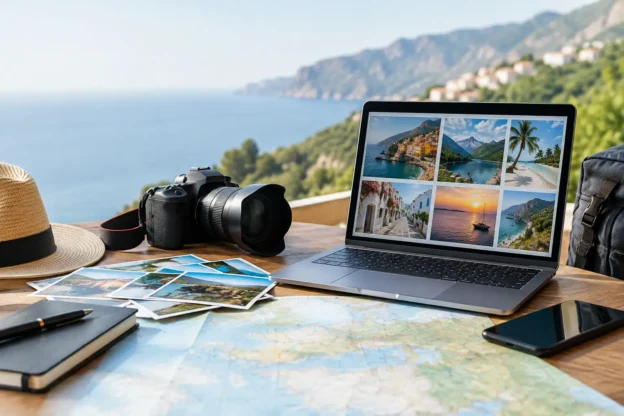
A travel image can establish a place in a second – but only if it is accurate, usable and properly licensed. This guide to travel image sourcing is for publishers, marketers, designers and print buyers who need location-led photography without spending hours sorting through generic results or subscription terms.
The objective is not simply to find a good-looking picture. It is to find the right image for the job: a recognisable London landmark for a news feature, a quiet European street for a brochure, a panoramic landscape for hospitality wall art, or an event photograph with the context your audience expects.
Start with the intended use
The fastest way to source travel photography is to define where it will appear before beginning the search. Editorial use, commercial promotion, social media, websites, printed materials and wall art can require different permissions, image sizes and visual treatments.
For editorial work, relevance and authenticity normally come first. A photograph of a city should reflect the actual location, season, event or subject being discussed. A wide cityscape may suit a feature opener, while a detailed image of transport, architecture, public activity or local signage can give a story more substance.
Commercial projects need an additional check. If people, private property, trademarks or identifiable venues are prominent, make sure the licence is suitable for promotional use. An attractive travel image is not automatically appropriate for an advert, campaign or product packaging. Read the licensing terms before design work is approved, not after.
For wall art, consider the room as well as the subject. Panoramas, coastal scenes, skylines and strong architectural compositions usually work well at larger sizes. A photograph intended for a small web banner may not have the detail or composition needed for a large framed print.
Search by place, subject and visual need
Place names are a useful starting point, but they are rarely enough. A search for London, Edinburgh, Paris or Sydney can return thousands of possible images. Add the detail that makes the image useful: neighbourhood, landmark, transport type, weather, time of day, season, event or viewpoint.
For example, a designer creating a campaign around British travel may need “London red bus at dusk” rather than simply “London”. A magazine picture desk covering a royal occasion may need the procession route, crowd activity or a particular ceremonial moment. A hotel buyer may be looking for a calm coastal panorama rather than a literal destination image.
Think in terms of both subject and mood. Documentary-style photographs are effective where credibility matters. Clean, uncluttered scenes can give marketing layouts more room for copy. Images with strong leading lines or an open area of sky may be more practical for website headers, covers and posters.
A specialist library is often more efficient than a broad search platform when the requirement is specific. Collections organised by country, city, event and theme help buyers move directly towards relevant material. This is especially useful for UK and European locations, transport, military subjects, seasonal scenes, sporting events and historic occasions, where captions and context matter as much as visual appeal.
Use captions as a quality check
A strong caption answers basic questions quickly: where was the image taken, what does it show, and when was it photographed? For editorial users, this information can prevent an expensive mistake. A picture of a familiar landmark taken years earlier may not be suitable for a current story if the surrounding area, branding or event context has changed.
Captions also help distinguish similar locations. A generic beach, bridge or market may look convincing at first glance, but the wrong place can weaken an otherwise well-produced piece of work. Where accuracy is important, check the caption alongside the image rather than relying on visual recognition alone.
Check technical suitability before buying
An image can look excellent in a thumbnail and still be unsuitable for the final output. Check pixel dimensions, orientation and crop potential early. A portrait image may not work for a landscape-led website banner; a tightly framed landmark may not leave enough space for a headline.
Print requirements deserve particular care. The larger the intended print, the more image data is required. Enlarging a small file can soften detail and expose noise, especially in skies, shadows and fine architectural features. If a larger file is needed, ask before choosing an alternative image. Some libraries can supply larger image sizes on request without adding unnecessary complexity to the purchase.
It is also worth considering consistency across a project. If a brochure, website or wall display needs several images, look for a coherent visual set. Matching light, season, colour palette and photographic style creates a more deliberate result than combining unrelated pictures of the same destination.
Understand the licence, not just the price
Paying for an image does not mean every type of use is included. The licence sets out how the photograph may be published, displayed or reproduced. It should be clear whether your intended use is editorial, commercial, digital, printed, promotional or decorative.
There is no single licence that suits every project. A local publisher using an image in one article has different needs from a national campaign, a product brochure or a hotel group ordering prints for multiple properties. Usage scope, distribution, duration and print run can all affect the correct permission.
Keep a record of the image reference, licence details and date of purchase. This makes later updates easier and gives your team a clear audit trail. It also avoids a common problem: an image is downloaded for one piece of work, then reused months later in a different campaign without checking whether that new use is covered.
The pay-per-image model is useful when requirements vary. It lets occasional buyers source a specific photograph without committing to a monthly download allowance, and it helps regular buyers pay for images that genuinely fit their brief rather than downloading placeholders to justify a subscription.
Build a shortlist before making a final choice
When an image search produces several suitable options, do not choose solely on immediate visual impact. Compare each image against the brief. Is the destination unmistakable? Is there space for text? Does the image show a dated detail? Will it sit well beside the other images in the project? Is the orientation correct?
A practical shortlist should include a first choice and at least one alternative. Travel photography can involve unexpected restrictions, whether that is an unsuitable crop, a missing release for a commercial use or a change in a client brief. Having a second option prevents a small issue from holding up a page, campaign or print order.
For time-sensitive editorial work, shortlist images that can be identified and licensed quickly. For longer-term marketing, spend more time checking composition and usage conditions. The right balance depends on deadline, budget and the consequences of using an image that is merely adequate.
Source travel photography with a clear brief
A concise brief improves every stage of image sourcing. Include the location, subject, intended audience, required orientation, final format, intended use, desired mood and deadline. Even a few precise words can eliminate unsuitable results.
Instead of asking for “travel images of Europe”, specify whether the work needs recognisable cities, rural landscapes, railway travel, festive markets, historic buildings, wildlife or coastal views. If the picture will become wall art, include the preferred dimensions and whether the space calls for a bold focal point or a quieter scene.
Prestige Pictures provides travel, editorial, event and scenic photography for buyers who want a straightforward route from search to licence or print. There is no subscription requirement, which is particularly useful when a project needs one distinctive image rather than a large monthly download package.
The best travel image does more than show a destination. It gives the viewer confidence that they are looking at the right place, in the right context, at the right quality for the work in front of them. Start with a precise brief, check the licence and file size, and choose photography that will still earn its place once the layout, publication or frame is complete.