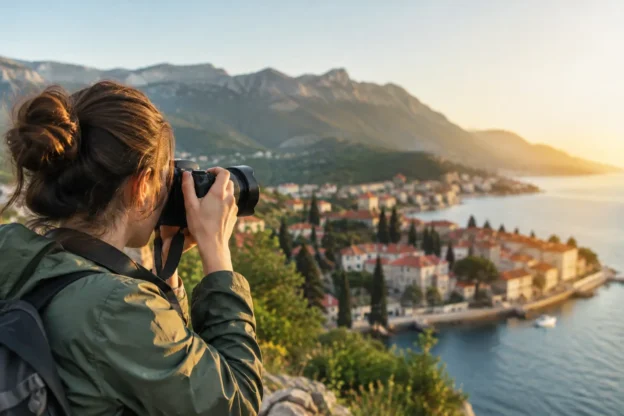
A photograph of a recognisable place does more than fill space on a page. It establishes where a story happened, gives readers immediate context and makes a subject credible. Location based editorial photography is built for that job: clear, accurate imagery of places, events and everyday scenes that helps a publisher or content team show the real setting behind the copy.
For buyers working to a deadline, the value is practical. A feature on London transport needs more than a generic train image. A travel article on Edinburgh, a report on a royal occasion or a piece about a European city needs pictures that look and feel specific to the subject. The right image can carry the location, season, scale and atmosphere before the first sentence is read.
What makes editorial photography location based?
Location-based editorial imagery is photography organised around a real geographic setting. It may show a city landmark, street, railway station, coastal view, countryside, public event or regional detail. The location is not incidental. It is the reason the image is useful.
This differs from broadly themed stock photography. A generic business meeting can support many commercial messages, but it cannot illustrate a news item about a particular district, venue or community. A well-captioned image of the Houses of Parliament, the London Underground, the Australian coast or a European Christmas market has a defined editorial purpose because the place itself forms part of the story.
The strongest files usually combine a recognisable setting with an editorially useful moment. That could be changing weather over a city skyline, a crowd arriving for a sporting fixture, ceremonial activity near a landmark, or a working transport scene. These photographs give designers and picture editors options beyond the predictable postcard view.
Why specific places improve editorial content
Readers notice when imagery is vague. An article may mention a city, county or event repeatedly, yet still feel detached if it is illustrated with a scene that could have been taken anywhere. Place-specific photography solves this quickly. It grounds a feature, news page, blog post, brochure or presentation in a setting readers can identify.
For publishers, this is especially useful when commissioning fresh photography is not realistic. Sending a photographer to a location takes time, budget and planning. It may also be impossible after an event has passed. A searchable library allows a team to locate suitable images while the story is still current, then license only the files required.
Marketing teams can also use editorial location images where the context is relevant and the licence supports the intended use. A regional campaign, visitor guide, property-related article or corporate publication may need an authentic view of a place rather than a polished advertising scene. The distinction matters: editorial images are often suitable for factual, descriptive or contextual use, but may not be appropriate for every promotional application.
Choosing the right location based editorial photography
Start with the story, not the image style. Define the place as precisely as possible, then consider the detail that makes it useful. Is the article about central London, a particular borough, a landmark, a transport route or an event held in the city? A search for “London” can return a broad selection. Adding the subject, season, angle or activity will narrow the result and produce a better fit.
A picture editor should also check whether the location is unmistakable. Some city views are attractive but anonymous. Others include recognisable architecture, signs, public transport, coastline or terrain that gives the audience confidence they are looking at the intended place. When location is central to the story, that clarity is often more valuable than dramatic lighting alone.
Timing matters too. A summer scene can be misleading for a winter feature, while an image from an earlier public event may not suit coverage of a current edition. Editorial photography is not always required to be taken on the day of publication, but captions and usage should not imply that an old image documents a new event. Where relevance is time-sensitive, check the date, caption and visible details before purchase.
Image orientation should be considered early. A landscape frame may suit a website banner or double-page spread, while portrait imagery can work better for a magazine column, social post or vertical display. Wide panoramic files are particularly useful for wall art and large-format layouts, but they need enough clear space for the intended crop and copy placement.
Captions, accuracy and licensing come first
Editorial imagery is useful only when it can be described accurately. A good caption identifies the location, main subject and any relevant event or occasion. For historic landmarks and public places, this may be straightforward. For sports, royal events, military subjects or public gatherings, captions need greater care because names, dates and context can affect how an image is presented.
Do not treat a location photograph as a blank visual asset. If people, brands, signage or private premises are visible, those details may affect the permitted use. Editorial licences are generally intended for publishing, commentary and factual content. They are not automatically a substitute for model releases, property releases or permissions needed for advertising, endorsement or product packaging.
The practical question is not simply, “Can this image be used?” It is, “Can it be used in this exact way?” A newspaper feature, educational article or factual blog may have different requirements from a paid social advert, a shop display or a branded campaign. Review the licence terms before publication, particularly where the image will support commercial messaging rather than report or describe a subject.
That does not make editorial photography difficult to buy. It means choosing with purpose. Buyers who establish the use, territory, distribution and format before selecting files avoid delays later in the production process.
Building a reliable picture search process
A fast search process begins with a short brief. Note the location, core subject, intended use, preferred orientation and whether the image must show people, weather, transport, architecture or a specific event. This stops a team from collecting attractive but unsuitable files.
Search by place first, then use related subjects to refine the selection. For example, a London search may be followed by river, bridge, theatre, railway, royal, skyline or festive terms. For travel content, try a destination alongside season, street scene, landscape, market, harbour or panoramic view. A library organised by geographic and subject categories makes this approach quicker than browsing a large, undifferentiated collection.
Keep a small number of alternatives in reserve. The first choice may have the wrong crop, insufficient space for text or a licence mismatch. A second view from the same location, perhaps with a different angle or orientation, protects the layout without forcing a last-minute change in direction.
Where a larger reproduction is needed, confirm the available file size before design work is finalised. This is relevant for print spreads, exhibition panels, hospitality interiors and wall art. A file that is suitable for a web article may not be sufficient for a large physical print, even if it looks sharp on screen.
One image library, two practical uses
Location photography has value beyond editorial pages. A strong image of a city, coast, landscape or seasonal scene can also work as decorative wall art. This gives businesses, offices, hotels and private buyers the option to select imagery with a real connection to a place rather than an abstract decorative theme.
The use case changes the selection criteria. For publishing, a clear landmark or documentary moment may be most useful. For a reception area or home, composition, colour balance and scale may take priority. The same location can support both needs, but the final choice should match the space or publication rather than assume one image suits every purpose.
Prestige Pictures is structured around this practical overlap: license an image for publication or choose photography as a print, without committing to a subscription. Buyers can search by location, event and subject, purchase the images they need and request larger image sizes where required.
A well-chosen place photograph should make the next decision easier for the viewer. Whether it is used beside a report, within a travel feature or on a wall, the location should be clear, the context should be honest and the image should earn its space.